Covid 19 - The Ultimate Pick-Me Virus
The internet defines a “pick-me” as someone desperate to stand out from others of their kind, someone who often goes to extremes to seek validation. One wise philosopher of the digital age (otherwise known as an Urban Dictionary contributor) sums it up quite succinctly: a pick-me is a “person who constantly begs for attention and approval, and has to make EVERYTHING about themselves,” even if it means “bringing other people down” in the process.
While the “pick-me” currently in question is an arguably non-living, spherical microbe with a protein coat, this article is about to lay out all the possible reasons why the universe should cancel this little parasite for being the ultimate “I’m not like other viruses.” Because not only does it love going… um… viral – it sure loves to “bring other people down”… (fair warning: this is merely the beginning of many unashamed puns).
However, before we begin, it’s time to address the cough in the room – what even is Covid-19?
Introducing the Virus with Main Character Syndrome
Covid-19, short for Coronavirus Disease 2019 (creative, right?), is an infectious, respiratory disease caused by the severe acute respiratory syndrome coronavirus-2 (mercifully nicknamed SARS-CoV-2)—a virus from the coronavirus family, which, for some reason, decided it was time to steal the spotlight from its older cousins SARS and MERS and launch a full-blown global career. Nepo baby, much?
This virus first emerged in Wuhan, China in late 2019 and wasted no time climbing the social ladder of pathogens. Uninvited, unbothered, and absolutely unwilling to stay local – its high infectivity and pathogenicity soon caused a worldwide pandemic (March 11, 2020 is a day that’ll forever go down in history) that plagued the world for 2 whole years, leading to a global lockdown and way too many awkward Zoom calls. Its origin is believed to be zoonotic—most likely from bats *cue your best Batman joke here*—but nothing’s been confirmed, so the mystery continues. Move over, Area 51!
The Rules of the Pick-Me Club
Covid-19 primarily spreads through respiratory droplets or aerosols when an infected person coughs, sneezes, or even just talks. It can also spread through contact with contaminated surfaces, which means touching your face after pressing elevator buttons became the equivalent of playing viral roulette. Essentially, nobody and nowhere was safe in this dark era.
The drill for survival went something like this:
- Wear an N95 mask at all times
- Maintain 6-feet-minimum social distancing
- Substitute handshakes with… er… elbow bumps?
- And for the love of God, DON’T blow out your birthday candles – instead, summon a gust of wind by wildly flapping your hands like you’re trying to swat an invisible swarm of flies, and then make your wish.
A Walking (or, Uh, Transmitting) Red Flag: Covid 19’s Symptoms
Before we dive into the drama, here’s a quick symptomatic rundown of Covid-19 for Gen Alpha and the following generations (since the rest of us are already pretty familiar with it). Most people infected with this virus experience mild to moderate respiratory illness and recover without the need for special medical treatment. However, some cases can turn severe, leading to serious illness and, unfortunately, even death. While older adults and individuals with underlying health conditions are at higher risk, the World Health Organisation warns that anyone—regardless of age—can become seriously ill or die from Covid-19. The Worldometer says that as of April 13, 2025, over 7 million deaths had occurred at the hands of this notorious virus – and the numbers haven’t stopped increasing.
So, What Makes Covid-19 the Ultimate Pick-Me Virus? Here Are Our Receipts.
In the last hundred years, the world hasn’t seen a microbial drama queen quite like Covid-19. This virus just refuses to be forgotten — every time we thought it was done, it popped back up like, “Miss me?” with a new mutated variant. COVID-19 isn’t just a virus; it’s a full-blown diva with a flair for chaos. While most other viruses politely drop by with a sniffle and leave after a week, COVID-19 decides to pull out an Uno 4+ Card and shake the world to its very core, causing over 100 countries to shut down in the span of a month.
But what exactly makes this virus the ultimate pick-me? Below, I’ll break down the key traits that earned COVID-19 its title — from its structure to its dramatic immune evasion — all of which make its transmission not only fast and aggressive, but wildly efficient.
Let’s begin with talking structure—because this virus isn’t just extra, it’s engineered for attention. Figure 1 below shows the basic diagram of a coronavirus. It’s got four main fashion pieces: the S (spike), M (membrane), E (envelope), and N (nucleocapsid) proteins– plus a whole cast of accessory and non-structural proteins that help it pull off its chaotic stunts.

Figure 1: Structure of Coronavirus
Adapted from Biophysical Society at biophysics.org
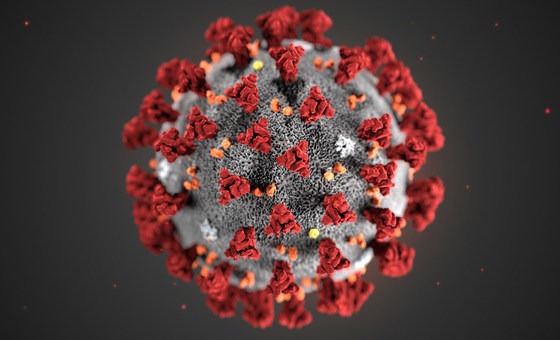
As you can see, its lipid envelope is studded with these S proteins, giving it a “crown-like” appearance (hence, corona), really cementing its Queen Bee status in the world of viruses. These spikes allow the virus to penetrate host cells and cause infection, and are the main reason this virus can infect our cells so efficiently. They latch onto a special receptor on our cells called ACE2 (think of it as the virus’s favorite VIP entrance into a club) and sneak right in to start replicating.
Inside the virus is a huge positive-sense RNA genome (think of it as the virus’s game plan), which is one of the biggest among RNA viruses. If you want to blame someone for Covid, it’s this dude.
Inside this viral shell is a huge positive-sense single-stranded RNA genome—one of the largest among RNA viruses,(think of it as the virus’s game plan. It’s quite self-centered… literally (because it’s in the centre… get it? Sorry.) If you’re looking for someone to blame for being holed up in your house for 24+ months, it’s this dude.
The S protein is truly the true main character that puts the crown on this virus. It binds super efficiently to ACE2 receptors, even more so than the one in SARS-CoV-1, thanks to some sneaky changes in its amino acid sequence. These changes include two “capping loops” that stabilise the interaction with ACE2 and make the bond even stronger. Basically, it’s like the virus added extra Velcro to its spikes to stick better to our cells. That’s one big reason SARS-CoV-2 spreads so easily and infects so well. Figure 2 shows a simplified diagram of how it attaches to our receptors.

Figure 2: The Spike Proteins of the Coronavirus Attach to the Host Cell’s Receptors Efficiently
Adapted from Sigma-Aldrich at sigmaaldrich.com
Even cooler (or scarier, depending on how you look at it), the spike protein can shape-shift. Scientists discovered that it has two main forms: a prefusion form that helps it fuse with host cells and a postfusion form that might help it avoid the immune system. The postfusion version is decorated with sugary molecules called N-linked glycans, which might act like a disguise—kind of like makeup that tricks the immune system into ignoring it or producing weak antibodies.
There’s also a unique feature that sets SARS-CoV-2 apart from its cousins: a furin cleavage site. This spot on the spike protein (with the sequence PRRAR) is like a secret weapon. It allows the spike protein to be sliced and activated by enzymes like furin and TMPRSS2, making it even easier for the virus to enter human cells. This is one of the big reasons why SARS-CoV-2 is more infectious and has a higher affinity to host cells than SARS-CoV-1—it just knows how to get in better.
But it’s not just about looks—this virus also knows how to manipulate the host’s immune system like a true mastermind. It plays a double game: first, it delays the body’s immune response, then suddenly triggers a hyperactive one called a cytokine storm, which can cause serious damage. In patients with severe COVID-19, scientists found that the early immune response was dysfunctional. There were more inflammatory signals (like IFNs and cytokines), fewer virus-fighting T cells, and a much slower drop in viral load. The storm just kept raging on, while the virus quietly thrived.
It also uses sneaky sidekicks like accessory proteins to mess with our immune system. One in particular—ORF8—has been shown to increase inflammation by activating macrophages (the immune system’s cleanup crew). In lab experiments, cells infected with the normal version of SARS-CoV-2 (with ORF8) caused more immune activation than ones infected with a version missing ORF8. So clearly, this accessory protein is a major player in the virus’s pick-me campaign. Figure 3 demonstrates how this occurs.

Figure 3: ORF8 Induces the Inflammatory Cytokine Response in Severe Covid-19
Adapted from Wu, Xiaosheng, et al.
And as if that weren’t enough, SARS-CoV-2 is a true multi-talented prima-donna when it comes to entering human cells. It doesn’t just rely on ACE2—it can also use other receptors like ANPEP, DPP4, DC-SIGN1, CLEC4G, and CLEC4M. Plus, it can enter cells in more than one way (endosomal and non-endosomal pathways), and it even uses epigenetic tricks to silence the body’s first-line immune response. Once inside, it doesn’t just take over—it initiates various forms of cell death (pyroptosis, apoptosis, necrosis), inflicting widespread damage and cellular disintegration.
If COVID-19 were a social media influencer, it’d be the one serving 200 different looks in 200 days. With its habit of constantly switching things up, this virus is the queen of reinvention—dropping new “variants” like it’s launching a chaotic spring collection (as in, literally springing them on us).
Each variant comes with a slightly new spike protein, like keeping up with the constantly changing trends just to stay relevant. This constant game of viral dress-up means vaccines and treatments have to keep refreshing their strategies to beat the virus’s 1 man fashion show. So no, it’s not that your vaccine didn’t “work”—it’s that the virus showed up in a new outfit and acted like it had never met your immune system before. It’s giving fake energy.
But what exactly are variants? Variants are just coronaviruses that inherited a specific set of distinctive mutations. These mutations aren’t random—they usually happen as the virus copies itself in your body, or when it’s under pressure from your immune system, medications, or vaccines. Think of it like viral stress shopping: it changes things up in response to its environment.
Several major variants have made international debuts, including Alpha, Beta, Delta, Gamma, and the headline-stealer, Omicron. NOT unicorn – Omicron (it’s a matter of great confusion). These variants have picked up mutations—many of them on the spike protein, the part that – if you remember from 1 section ago – helps the virus sneak into your cells. Some of these changes have made the virus more contagious, better at dodging antibodies, or harder to detect with certain tests. Yes, it’s even managed to ghost a few diagnostic tools.
The spike protein is the virus’s signature accessory, and unfortunately, it’s also the one that mutates the most. Many COVID tests and vaccines are based on this protein, so when it changes, it can mess with detection and immune response. That’s why scientists also pay close attention to the nucleocapsid (N) protein—it’s less flashy, mutates less often, and is more reliable when it comes to diagnostics.
Now here’s the plot twist: compared to other RNA viruses, SARS-CoV-2 actually mutates at a slower rate. It picks up around 2–3 mutations a month, while influenza clocks in at 4 and HIV mutates at a wild 8 per month. This slower mutation pace is thanks to a proofreading enzyme (ExoN in nsp14) that checks its work like an overachieving group project partner. But if this proofreader goes MIA? The mutation rate spikes big time—15 to 20 times higher.
Even so, the virus still finds ways to remix its look. When two variants infect the same host, they can exchange genetic material like it’s a genetic swap meet, creating even more diverse versions. Human cells can even contribute to this process by editing viral RNA, further spicing up the mutation game.

Some viruses like to make a grand entrance—but not COVID-19. This one prefers the stealth, unpredictable approach. You see, SARS-CoV-2 can also spread through asymptomatic carriers, meaning people who don’t show any symptoms can still pass it on to others. This makes it especially tricky to control, because someone can feel completely fine and still be highly infectious. This is probably arguably the most problematic unproblematic thing about Covid-19: one party with the wrong person, and it’s all over, for all of you.
Unfortunately, even after the fever’s gone and the test is negative, this virus won’t let you move on. It’s like a toxic ex that keeps texting you, or that one unemployed friend who sends you reels 24/7. Many people suffer from long COVID, which comes with symptoms like fatigue, brain fog, shortness of breath, and loss of taste or smell that can linger for months.
I don’t even have anything to say here, except thanks a lot, Rachel.
The Final Scoop: We Don’t Pick You, Covid-19
While this article may have unexpectedly morphed into a 3000 word rant about Covid-19, I hope the biggest takeaway from this will be that it’s not cool to be pick-me, guys! I’m half-kidding, of course, but seriously – this attention-hungry virus has no chill. It single-handedly took over the world, one spike at a time, with its tyrannical structure, relentless mutations, and refusal to leave without making a dramatic exit. It’s quite literally the ultimate pick-me: persistent, dramatic, unpredictable, and absolutely obsessed with staying in the spotlight.
And, unlike actual pick-mes, we sadly can’t just mute it, block it, or leave it on read. It’s not going away unless we take it seriously—with better hygiene practices, vaccine updates, and a whole lot of scientific research.
References:
Urban Dictionary: Pick Me Definition
- PMC: COVID-19 Impact Study
- WHO: Coronavirus Information
- Live Science: First Coronavirus Case
- University of Cincinnati: History of Pandemics
- PMC: COVID-19 Research Article
- News18: History of Lockdowns
- BMJ Global Health: COVID-19 Study
- PMC: COVID-19 Analysis
- Mayo Clinic: Coronavirus Symptoms
- Taylor & Francis: COVID-19 Research
- PubMed: COVID-19 Study
- NIAID: Origins of Coronaviruses
- PMC: Spike Protein Research
- BBC News: Global COVID-19 Coverage
- Worldometer: COVID-19 Death Toll
- Baylor College of Medicine: SARS-CoV-2 Information
- PMC: Coronavirus Research
- Wiley: COVID-19 Study
- PMC: COVID-19 Analysis
- Nature: SARS-CoV-2 Research
- PMC: Spike Protein Analysis
- PMC: COVID-19 Research
- ScienceDirect: COVID-19 Study
- CDC: Long-term Effects of COVID-19
Author: Iffat Kaur Narula