Everyday Chemistry: The Secret Science of Soap
From ancient Babylon in around 2800 B.C. to the present day, humans have produced soap to remove dirt and grease from many different surfaces. While now there are many different types of soap, all of them remove germs, dirt and grease in the same chemical manner as they did in Ancient Babylon.
Soap is made up of long, pin shaped molecules called surfactants made up of two different regions: a hydrophilic- water loving- head and a hydrophobic- water hating- tail. The hydrophilic part of the molecule is known as a polar salt and is attracted to water, forming bonds with it, while the hydrophobic region is made up of hydrocarbons or chains of fatty acids, so are attracted to oil but repelled by water.
When surfactants come in contact with water they float in solitary units then associate with other molecules and then gather themselves into micelles- small bubbles- when lathered with their tails pointing inward while their heads point outward interacting with the surroundings.


On an everyday basis we wash our hands using soap to remove dirt and germs. But how does this happen? Some viruses and bacteria have lipid membranes (cell membranes) that are like double-layered micelles- they have two belts of hydrophobic tails that are between two hydrophilic heads. Vital proteins of the membrane are scattered throughout these belts that allow the cells to function and stay alive. This exists in viruses and bacteria such as HIV, Ebola, Zika, Dengue etc. When you wash your hands using soap and water, microorganisms on your skin are surrounded by soap molecules. The water repellant tails of the now free-flowing soap molecules will try to escape the water molecules and will therefore attach to anything to escape the water and will therefore force themselves into the microbe or virus’s lipid envelopes attaching to the pathogen. Similarly, the hydrophilic tails will attach to dirt and grease while trying to escape water. Then due to the friction created when we scrub our hands the dirt, viruses, bacteria and grime will lift off our skin and will be washed away by water.
Therefore, soap can link to lipid membranes and also attach to dirt and grime allowing it to clean your hands and protect you from dirty substances and pathogenic molecules that can make you ill!
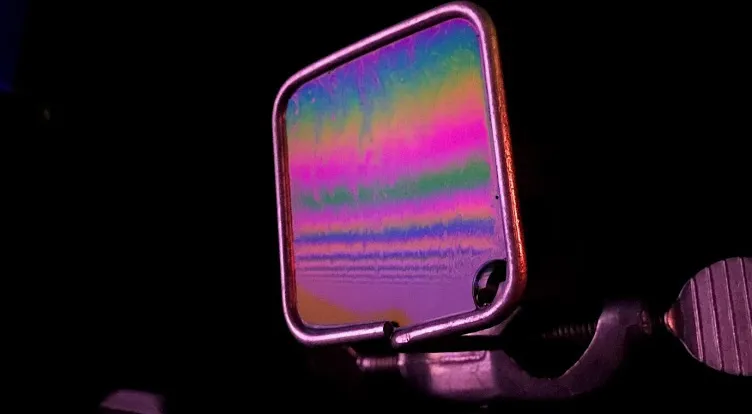
FUN FACT: In detergents, soap molecules not only remove dirt but also provide more efficient methods of washing. Have you ever noticed how a blob of water on a surface maintains its shape without spreading? The force that causes this is called surface tension. Detergents lower the water’s surface tension thereby letting water spread and perforate surfaces more efficiently— in essence making it behave ‘wetter’!”
Citations:
- Project WET - Soap Science
- Britannica - How Does Soap Work?
- Yale Medicine - Why Soap Works
- University of York - Soapy Science
Picture citations

Author: Dheera Vandini Mehendiratta