The Biochemistry of Caffeine Addiction: How It Hijacks Your Brain Chemistry
The National Library of Medicine states that “Caffeine is the most consumed psychoactive drug in the world”. Why? Perhaps because it is legal, socially accepted, and possibly the first thing that sleepyheads such as you and I reach for in the morning.
But, what makes this bitter-tasting molecule so irresistible to us? The answer lies deep in our brain chemistry. Behind every caffeine craving is a complex interaction between neurotransmitters, receptors, and our brain’s reward system.
To understand caffeine, let’s begin with Adenosine - a neurotransmitter that gradually builds up in our brain throughout the day. As it accumulates, adenosine binds to specific receptors, signaling to our brain that it’s time to rest. The more it binds, the sleepier we feel, meaning that it promotes our sleep drive.
Caffeine is structurally similar to adenosine. So similar, in fact, that it can also bind to the same receptors! However, the plot twist is that caffeine blocks the receptors instead of activating them.
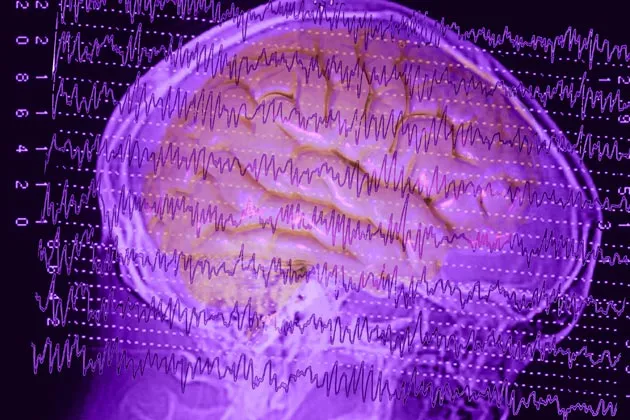
With adenosine locked out and unable to perform its task, our brain doesn’t receive the “time to rest” message from it. Neurons keep firing, and we automatically feel more awake, alert, and ready to take on the day because of caffeine. Therefore, this means that caffeine doesn’t give us energy - it simply removes our brain’s signal to rest.
And just when you thought that caffeine has done enough, it continues to work by affecting dopamine, the brain’s feel-good neurotransmitter. It increases dopamine activity, particularly in areas that are involved in attention and reward, creating a subtle high that makes us feel more focused and upbeat.
This is one reason caffeine can become habit-forming since we’re not just avoiding sleepiness, we’re subconsciously also chasing a better mood!
Our brain also constantly tries to maintain balance. So, if we flood it with caffeine regularly, it will simply adapt by building more adenosine receptors. Which means that over time, our regular caffeine dose does not feel as effective as it used to, and we’ll need more caffeine to get the same effect that got us addicted in the first place. This is why stopping caffeine intake suddenly leads to withdrawal symptoms such as headaches, fatigue, and a low mood, as our brain is now hypersensitive to adenosine, and chooses to rebound hard.
Even though caffeine dependence is not an addiction in the clinical sense since there is no dangerous compulsion or life disruption for most people, it does still involve physiological dependence and withdrawal. This is why the latest edition of the Diagnostic and Statistical Manual (DSM-5) has introduced new provisions for caffeine-related disorders, and it has been recognised as a clinical condition.
And just like any drug, genetics play a part in caffeine tolerance. Variations in enzymes like CYP1A2 influence how quickly we metabolise caffeine. Some people get jittery after one cup, while others can sip espresso at midnight and sleep like a baby.
However, despite its potential for dependence, caffeine isn’t all bad! It can improve attention, reaction time, and even protect the brain - some studies also link moderate consumption with a lower risk of Parkinson’s and Alzheimer’s disease. That said, caffeine isn’t all good either - it can worsen anxiety and disturb sleep, especially when overused or consumed late in the day.
Like most things in biochemistry (and in life), dose and timing are everything.
So what is the takeaway from this article? As someone who is painfully aware of their own caffeine addiction, writing this article was more of a self-intervention than a science piece. But here’s what I’ve learned (the hard way):
Caffeine doesn’t give us energy - it just hijacks our brain into ignoring the fact that we’re tired. It blocks the sleep signals, pumps up our dopamine, and keeps us in that wired-but-functional state we’ve all come to rely on. Understanding the biochemistry behind it helps us make smarter, more mindful choices. No one’s asking you to quit (trust me, I couldn’t even if I tried), but being conscious of your timing and intake can save you from the worst of the crashes, withdrawals, and 3 a.m. existential crises.
Drink smart. Sleep smarter.
Sources:
- Caffeine’s Mechanisms of Action and Its Effects on the Human Body – NIH (PMC3680974)
- Adenosine and Sleep – Sleep Foundation
- What Doctors Wish Patients Knew About the Impact of Caffeine – AMA
- Caffeine and the Brain – NIH (PMC4115451)
- The Multifaceted Effects of Caffeine on the Central Nervous System – NIH (PMC9880799)
- 9 Reasons Why the Right Amount of Coffee Is Good for You – Johns Hopkins Medicine
Author: Saisha Arora