Turtle Dentists and Neurotransmitters: The Biochemistry Behind Dreams
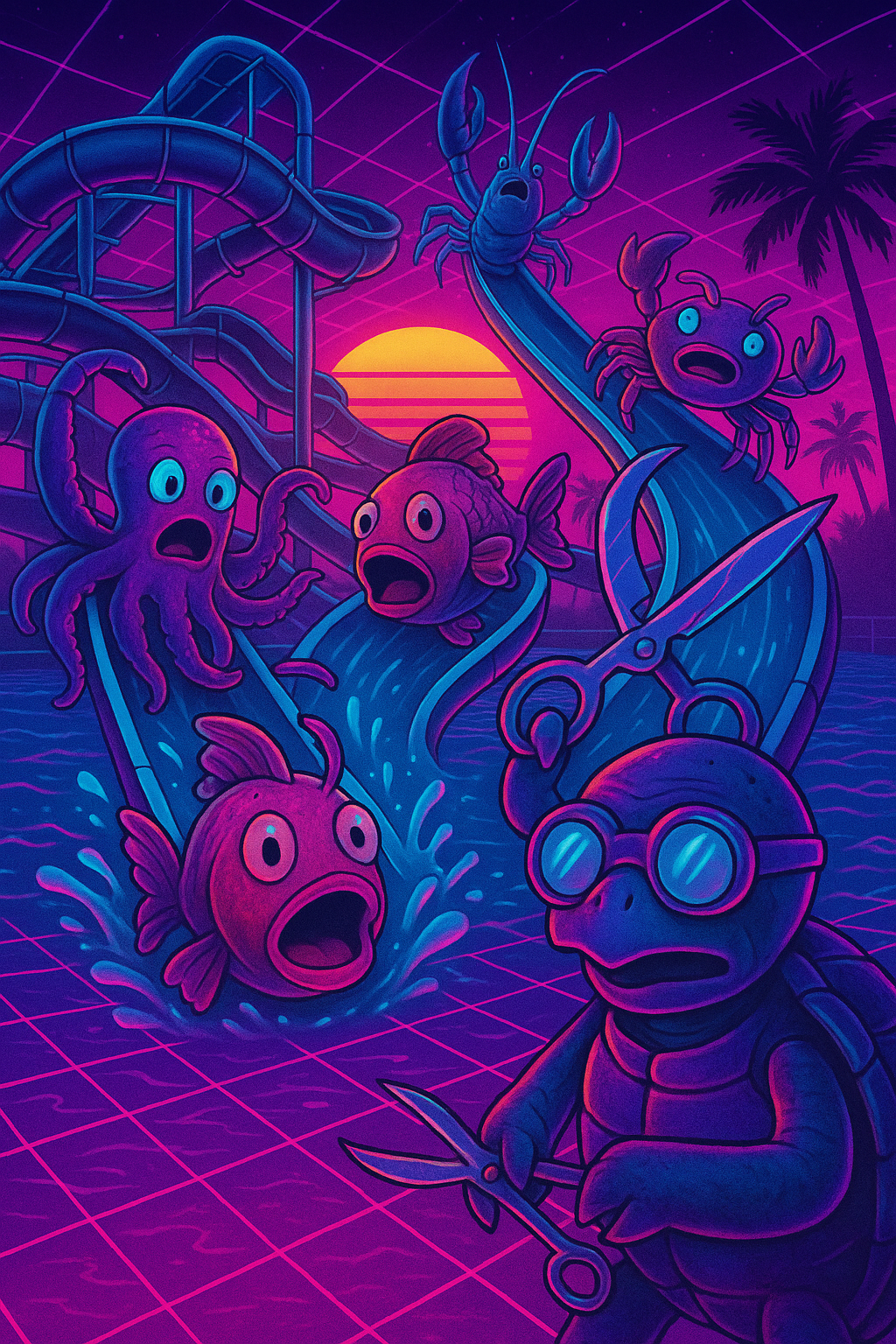
Yesterday, I had a dream that I was in a waterpark… swarming with half-human, half-seafood creatures, while being chased down slippery slides and across an ocean that felt like hardened jelly by a turtle-dentist wielding jagged scissors. He kept shouting questions about the cleanliness of my enamel, and instead of being fazed by this, I kept laughing and throwing– um– loofahs? at him. And somehow, all of this, including the existence of a murderous turtle-dentist, made perfect sense to me while I was asleep.
If you’re wondering how I remember all of this, I honestly don’t– I just remember bits and pieces that I scribbled onto a piece of paper when I woke up (keeping in mind the sanctity of this article). Those notes have since morphed into a kind of fuzzy memory in my head. I do remember how I felt, though: something that, in hindsight, seems more nightmarish (murderous turtle-dentist and all) had felt like a jolly time in the dream, and weirdly, it all seemed completely normal. Apparently, somewhere in the deep, dark depths of my subconscious, waterparks for half-seafood humans and angry turtle-dentists are totally acceptable, and jelly oceans filled with loofahs are just part of the scenery.
So now I can’t help but wonder: why do I dream about my crush one night and a deranged turtle-dentist the next? How can I keep dreaming about my crush? Why doesn’t my crush like me ba– okay, I might be getting a bit off-topic here.
But seriously, what’s up with this twisted dichotomy of dream logic, and why does it all make perfect sense while sleeping? What does it all mean? Why can’t I remember anything afterwards? How do dreams even work? Why do they happen? Can I control my dream?
If you accompany me in having any one of these bajillion questions, you’ve come to the right place. Let’s start off with the most basic one: what even is a dream? But first, please enjoy this random meme I found on the Internet.

Figure 1: A Meme About Dreams (Wait, That Kinda Rhymes!!)
From Cheezburger https://memebase.cheezburger.com/tag/dreams
What Even Is a Dream?
Sleep happens in cycles made up of four main stages. The first three are non-REM (NREM) stages, starting with light sleep where your body begins to relax, then moving into deeper stages where brain activity slows and the body repairs itself.
Then comes the showstopper– or, well, showstarter: REM sleep (Rapid Eye Movement). This is the final and most active stage of the sleep cycle, where most dreams occur. This is named so because your eyes literally dart around under your eyelids, your brain lights up almost as much as when you’re awake, and your body goes temporarily paralysed thanks to REM atonia, a state triggered by motor inhibition from brainstem circuits (otherwise, you’d actually try to fight that turtle-dentist and possibly whack the poor sibling lying next to you). In biological terms, the brainstem is thought to generate REM sleep, while the forebrain creates the dream experience itself.
Why Do We Dream?
The truth is: even today, no one fully knows. But neuroscientists have gathered some strong clues, proposing several theories for why it happens:
- Memory Consolidation Theory: Dreams help store and organise the day’s experiences.
- Emotional Processing: The brain works through complex feelings, like anxiety or love.
- Problem-Solving Theory: Some dreams help you subconsciously work through challenges.
- Activation-Synthesis Theory: The brain just fires random signals, and your mind scrambles to make a story out of the chaos (so yes, sometimes dreams are just glorified improv).
The Dream Cocktail
Dreams are brewed from a potent mix of neurotransmitters and hormones– a chemical cocktail that transforms your resting brain into your favourite nighttime delulu fix.
- Acetylcholine: The Conductor
Acetylcholine levels surge during REM sleep, stimulating cortical neurons and creating the vivid, hallucinatory imagery of dreams. Its activity is essential for memory consolidation, helping transform experiences into long-term memories.
- Serotonin: The Sleep Architect
Serotonin initiates sleep and supports non-REM stages. Interestingly, serotonin levels dip during REM, potentially freeing the cortex to generate the bizarre, illogical sequences characteristic of dreams.
- Dopamine: The Emotional Painter
Dopamine infuses dreams with emotion and motivation-related content. Elevated dopamine activity can make dreams more vivid or bizarre, shaping the emotional tone and sometimes influencing dream recall.
- Norepinephrine: The Logic Suppressor
Norepinephrine plummets during REM sleep, contributing to the surreal and often illogical nature of dreams. This reduction also explains why memories of most dreams fade rapidly upon waking.
- Glutamate: The Excitatory Engine
Glutamate drives the electrical activity in REM sleep, ensuring the brain remains highly active while the body rests. This excitatory neurotransmitter is a key player in the vividness and narrative flow of dreams.
- GABA: The Tranquiliser
GABA, an inhibitory neurotransmitter, keeps muscles paralysed and neural circuits balanced, ensuring a state of calm and balancing out glutamate’s effects by ensuring brain activity doesn’t ramp up too much.
Where is the bar for this cocktail located, you may ask? ID and licence first, please, before proceeding to see the answer below:
During REM, the amygdala (emotion center) and hippocampus (memory hub) are hyperactive, while the prefrontal cortex (the logic and decision-making zone) takes a nap. This explains why you can fly, breathe underwater, or find turtle-dentistry entirely normal!
What Controls the Genre of My Dream?
Nightmares are basically the brain’s way of running “fear simulations.” Elevated levels of cortisol (the stress hormone) and increased activity in the amygdala can lead to intense, frightening dream content.
Your dream’s genre, whether romantic, terrifying, or just plain weird, depends on which neurotransmitters are most active. High dopamine and low serotonin? You’re in for an emotional rollercoaster. Elevated stress hormones? Cue the horror movie soundtrack.
Why Do We Forget Most Dreams?
Why does the seemingly most outrageous or beautiful dream disappear from our minds completely mid-breakfast? That’s because the hippocampus, which transfers short-term memories into long-term storage, is relatively inactive during REM sleep.
Without enough norepinephrine (needed for memory formation), dream memories fade fast. You might recall only the most emotionally intense moments, which is why nightmares and dreams about your crush tend to stick.
Can You Control Your Dreams? The Science of Lucid Dreaming
Lucid dreaming– when you actually realise you’re dreaming and can control what happens– is linked to a partial reactivation of the prefrontal cortex during REM.
Neurochemically, it’s believed to involve increased acetylcholine and dopamine levels. Some people train themselves to induce lucid dreams through reality checks, meditation, or journaling. So yes– with practice, you might just be able to turn that turtle-dentist into a candy, for all its delicious irony.
Finally, What Does it All Even Mean?
People have tried to decode dreams for centuries. Freud famously called them the “royal road to the unconscious” – but modern science hasn’t found any solid evidence that dream symbols have universal meanings.
Dream interpretation today is completely subjective. A dentist-turtle might mean freedom to you, stress to someone else, or maybe you’re just subconsciously guilty for forgetting to brush your teeth before sleeping.
Maybe our dreams are something else entirely– simulations running when a little space opens up in the system. Maybe reality itself is the illusion. Who’s to say?
References
- https://health.clevelandclinic.org/why-do-we-dream
- https://ijbi.edwiserinternational.com/admin/uploads/CBN4MV.pdf
- https://www.scientificamerican.com/article/the-science-behind-dreaming/
- https://choosemuse.com/blogs/news/the-science-of-dreams-what-happens-in-the-brain-when-we-dream?srsltid=AfmBOoodehhjDtw-RDOLkXWhWRzFUreZZ-bRPjiHLg9fYbcI44qP671_
- https://memebase.cheezburger.com/tag/dreams
Author: Iffat Kaur Narula